A small chip on one front tooth and a wish to change the shade and shape of several teeth may both bring you to a cosmetic dental consultation. But they lead to different questions. How much of the tooth needs to change? How much preparation would that take? What will the repair need over time?
Dental bonding and porcelain veneers are two cosmetic dentistry options we offer at Wichita Family Dental. Bonding uses resin shaped directly on the tooth. A porcelain veneer is a custom shell that covers the front of a tooth. Both can change what you see when you smile, but the condition of your teeth, your bite, and your goals help determine which option is worth considering.
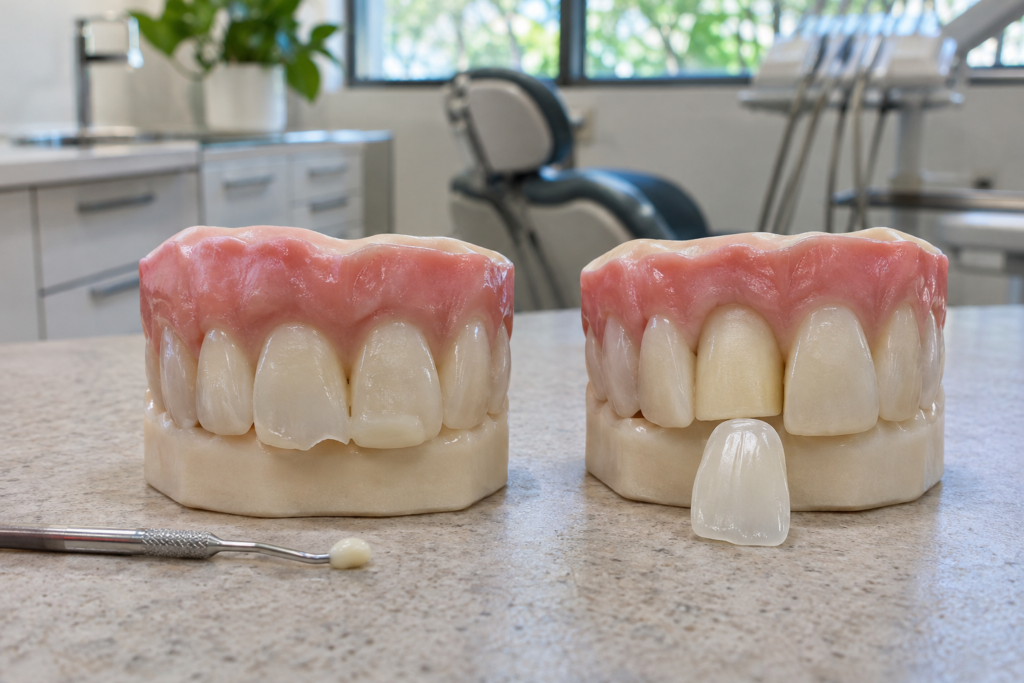
What Is Dental Bonding?
With dental bonding, the dentist applies tooth-colored composite resin directly to the tooth. The dentist chooses a shade, prepares the surface so the material can adhere, then shapes and hardens the resin with a curing light. The last steps are to polish the area and check how it fits when you bite.
Bonding may be useful for rebuilding a small chipped corner, smoothing the appearance of an uneven edge, or narrowing certain small gaps. Because the dentist can add resin to a specific area, it often requires little removal of healthy tooth structure. Preparation still depends on the condition of the tooth and the size of the repair.
Composite can stain, wear, or chip over time. In some cases, the dentist can polish or repair an existing bonded area. In others, replacement may make more sense.
What Are Porcelain Veneers?
Porcelain veneers are thin, custom shells bonded to the front surfaces of teeth. They can change visible shade, shape, or proportions. A dentist may discuss a veneer for one tooth or plan several together when a patient wants changes across the front of the smile.
The dentist evaluates the teeth and bite, discusses the desired appearance, and takes impressions or digital records for fabrication as appropriate. Before bonding a veneer in place, the dentist checks its fit and appearance.
Porcelain veneers commonly require some enamel removal to make room for the shell. The amount varies by tooth and treatment plan. Enamel removal, when needed, is irreversible. Ask what preparation your teeth would need before deciding.
Dental Bonding vs. Veneers at a Glance
| What to compare | Dental bonding | Porcelain veneers |
| Material and placement | Composite resin is shaped directly on the tooth. | A custom porcelain shell is made separately and bonded to the front of the tooth. |
| Typical use | A small change, such as rebuilding a corner or adjusting an edge. | A change to the visible shade, shape, or proportions of one or more teeth. |
| Tooth preparation | Often limited, depending on the tooth and the repair. | Commonly involves enamel removal; the amount varies. |
| Staining and wear | Composite is more prone to staining and wear. | Porcelain generally resists staining better, but it can still chip or crack. |
| If damage occurs | Polishing or repair may be possible after an evaluation. | The dentist may recommend repair or replacement, depending on the damage. |
The same cosmetic concern can lead to different recommendations. A small chip in a healthy tooth is different from a chip next to a large filling or on an edge that takes heavy bite pressure.
Two Examples of How a Dentist Might Decide
A Small Chip on One Front Tooth
Suppose a tooth has a small chipped corner, and you like its overall shade and shape. If the tooth is healthy and the repaired edge can work with your bite, bonding may be enough to rebuild that corner. The dentist can focus on the area you want to change.
If the chip happened during an injury, or if you suspect a crack, contact a dentist promptly. Pain when biting or sensitivity to hot or cold can be signs that the tooth needs evaluation before a cosmetic repair is considered.
Several Front Teeth Look Uneven or Discolored
Suppose you want to change the shade and proportions of several front teeth. The dentist may discuss porcelain veneers because they allow changes across the front surfaces. The discussion should include how much preparation each tooth may need and whether existing fillings, wear, or bite pressure affect the plan.
If shade is your only concern, ask whether whitening is worth considering first. Whitening can change the shade of natural teeth, but it does not whiten existing bonding or veneers. If you’re considering both whitening and a restoration, discuss the order before choosing the restoration shade.
When Neither Option Addresses the Main Concern
Bonding and veneers can change the visible shape of a tooth, but they don’t move teeth. If crowding or tooth position is the main concern, the dentist may discuss an orthodontic evaluation. A gap caused by a missing tooth also needs a different evaluation because adding resin or covering a neighboring tooth does not replace the missing one.
Decay, gum disease, and structural damage may need attention before cosmetic treatment. The exam helps the dentist separate what you’d like to change about your smile from anything that needs care first.
What Upkeep Do Bonding and Veneers Need?
Both require regular brushing, cleaning between teeth, and dental checkups. Avoid chewing ice or using your teeth to open packages, and tell your dentist if you grind or clench. The force on the repaired edge or veneer can affect the treatment plan as well as its upkeep.
Composite may lose its polish or pick up stains. Porcelain tends to resist staining better, but that doesn’t make it immune to damage. The natural teeth and gums around either restoration still need care. If an area becomes rough, chips, or feels different when you bite, have the dentist check it so you know whether polishing, repair, or replacement is appropriate.
Neither treatment has a guaranteed lifespan. Ask what upkeep is realistic for your teeth, especially if you’ve had repairs in the same area before.
What to Ask at a Cosmetic Consultation
You don’t have to choose a treatment before coming in. A comprehensive evaluation helps us understand the condition of your teeth and gums, how your teeth meet, and what you want to change. It also gives you a chance to ask questions such as:
- Can we address the area that bothers me without treating neighboring teeth?
- How much tooth preparation would each option require in my case?
- Should I address whitening, tooth alignment, or grinding before deciding?
- If the restoration chips or wears, what repair options might be available?
At Wichita Family Dental, our Four C’s are Comprehensive, Convenient, Comfortable, and Compassionate care. For a cosmetic consultation, that means looking at your whole mouth, explaining the options in plain language, and making room for your questions before you decide.
Contact Wichita Family Dental to schedule a consultation and discuss which options may fit your teeth, goals, and preferences.